When Squid Game: The Challenge debuted on Netflix, it represented something unprecedented: a global streaming platform transforming a scripted drama into a massive reality competition spectacle. The show quickly became one of the most talked-about unscripted experiments in streaming television.
Now the franchise is evolving again.
With Squid Game: The VIP Challenge reportedly bringing recognizable reality television personalities into the competition, Netflix appears ready to lean even further into crossover casting. Instead of relying solely on unknown contestants, the show is beginning to recruit figures already familiar to audiences from other reality franchises.
The shift reflects a broader trend across modern unscripted television: reality shows are no longer isolated formats. They are becoming interconnected entertainment ecosystems.
Why Streaming Platforms Are Embracing Crossover Casting
For producers, crossover casting solves several problems at once.
First, recognizable personalities arrive with built-in audiences. A contestant who previously appeared on The Traitors, Love Island, or The Bachelor already brings followers across social media platforms. That existing fan base can instantly boost awareness for a new show.

Second, experienced reality contestants understand the mechanics of unscripted storytelling. They know how to deliver confessionals, navigate alliances, and create memorable television moments.
In a competitive streaming landscape, those advantages are significant.
The approach mirrors trends seen across other franchises, where reality stars migrate between formats to sustain visibility. As discussed in our recent breakdown of reality shows becoming high-risk investments, networks increasingly rely on familiar personalities to reduce the uncertainty that comes with launching new competition formats.
The Reality Star Economy
Reality television has quietly developed its own talent economy.
Contestants who gain attention on one show frequently transition into other formats, podcasts, influencer careers, and spin-off series. Over time, some evolve into full-time reality personalities.
This phenomenon creates a new category of entertainment figure: the professional reality contestant.
A simplified comparison shows how casting strategies have evolved.
| Era | Casting Approach | Audience Expectation |
|---|---|---|
| Early Reality TV | Mostly unknown contestants | Discovery and authenticity |
| Mid-2010s | Influencer-adjacent personalities | Social media engagement |
| Streaming Era | Established reality stars crossing franchises | Familiar personalities and viral moments |
Crossover casting is the logical next step in this evolution.
Squid Game’s Format Is Perfect For Celebrity Contestants
Unlike traditional dating shows or social strategy formats, Squid Game revolves around high-stakes challenges inspired by childhood games. The premise naturally lends itself to dramatic competition and larger-than-life personalities.
Adding recognizable reality figures amplifies that effect.
Fans already familiar with contestants’ reputations will bring expectations into the competition. Strategic players from shows like The Traitors might approach the game differently than personalities known primarily for romance-focused series.
The tension between those backgrounds creates a new layer of unpredictability.
In other words, crossover casting doesn’t just generate publicity — it can fundamentally reshape how the game unfolds.
The Rise Of The Reality TV Shared Universe
The idea of a shared universe isn’t new in entertainment. Marvel, DC, and other franchises have built entire industries around interconnected storytelling.
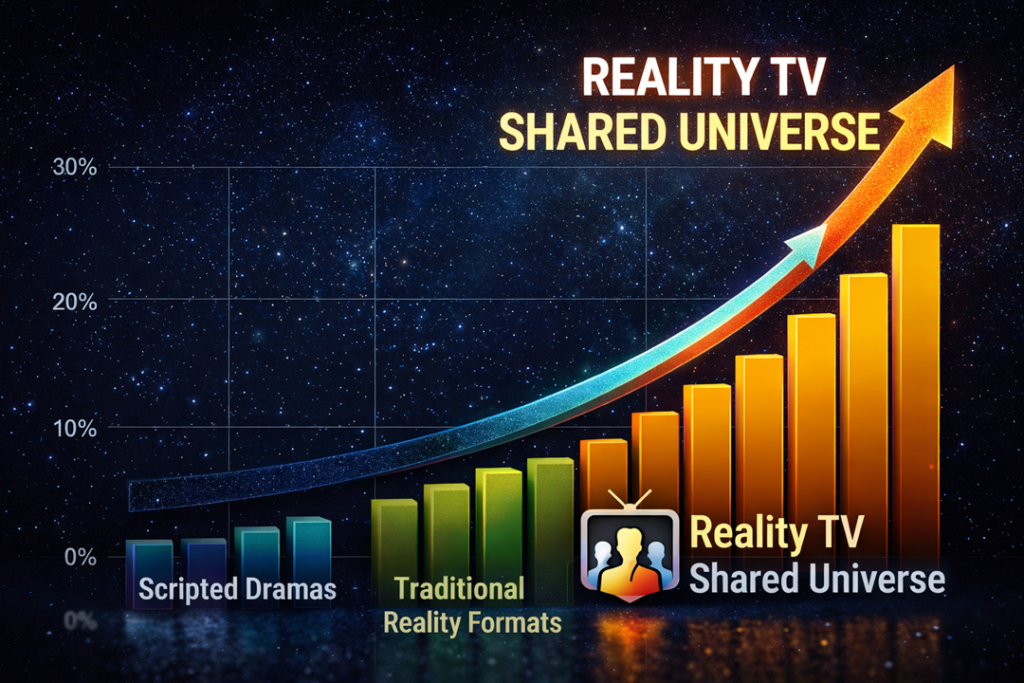
Reality television is now experimenting with a similar concept.
Contestants increasingly appear across multiple formats:
- Competition shows
- Dating programs
- Strategy-based reality series
- Celebrity spin-offs
For viewers, this creates continuity. A contestant’s personality, strategy, and reputation carry from one show to another, allowing audiences to follow familiar figures across different formats.
This cross-pollination turns reality television into an ongoing narrative ecosystem rather than a collection of isolated shows.
Social Media Amplifies The Crossover Strategy
Another reason networks embrace crossover casting is the way modern audiences consume reality television online.
Social media platforms encourage viewers to follow contestants beyond a single show. When those personalities appear on new programs, their followers often migrate with them.
The result is an immediate conversation engine.
Casting recognizable contestants ensures that viewers begin discussing the show long before the first episode airs. Reaction videos, speculation threads, and prediction posts spread rapidly across platforms like TikTok and Reddit.
In the streaming era, that kind of organic publicity is invaluable.
The Risks Of Familiar Faces
Despite its advantages, crossover casting is not without risk.
Part of the appeal of reality television has always been the discovery of new personalities. When too many shows rely on familiar contestants, audiences may begin to feel that the genre is recycling the same figures repeatedly.
Producers must balance the benefits of recognizable personalities with the excitement that comes from introducing fresh competitors.
If the balance shifts too far toward celebrity casting, reality television risks losing the unpredictability that made it popular in the first place.
What This Means For The Future Of Reality Competitions
The growing crossover trend suggests that reality television is entering a new phase.
Instead of treating each show as a standalone project, networks increasingly build interconnected ecosystems where contestants move between formats and franchises. This strategy helps maintain audience engagement while reducing the risks associated with launching entirely new personalities.
For Squid Game: The VIP Challenge, the approach could prove especially effective.
The show’s dramatic challenges, cinematic presentation, and massive global audience already give it a strong foundation. Adding recognizable reality stars may simply accelerate its cultural impact.
Whether audiences ultimately embrace the crossover experiment remains to be seen. But one thing is clear: in the streaming era, reality television is evolving into something far more interconnected than ever before.