
The announcement of America’s Got Talent going live at sea signals a major evolution in how reality TV franchises are thinking about their future. No longer confined to weekly episodes and streaming drops, reality shows are increasingly transforming into immersive, real-world experiences that extend far beyond the television screen.
This move reflects a broader industry trend where networks and production companies are looking to deepen audience engagement. Instead of simply watching contestants perform, fans are now being invited to participate, interact, and live inside the brand itself—whether that means attending live tapings, themed events, or in this case, sailing on a cruise built around the show.
For a franchise like America’s Got Talent, which thrives on spectacle and audience reaction, the transition to a live-at-sea format feels like a natural extension of its core identity.
Why Reality TV Is Moving Into Physical Spaces
At the center of this shift is a simple reality: viewership alone is no longer the endgame. With streaming platforms fragmenting audiences and advertising models evolving, production companies are exploring new revenue streams and engagement strategies.

Live experiences offer several advantages:
| Strategy | Impact On Franchise |
|---|---|
| Experiential events | Deepens fan loyalty and emotional connection |
| Ticketed access | Creates direct revenue beyond ads |
| Social media amplification | Generates organic marketing through attendee content |
| Brand expansion | Positions shows as lifestyle properties |
This model mirrors what we’ve already seen in music festivals and sports entertainment, where the experience itself becomes the product. Reality TV is now following that blueprint.
Cruise-based formats are particularly attractive because they create a controlled, fully branded environment—essentially a floating production set where fans are immersed in the show 24/7.
The Business Logic Behind “AGT At Sea”
Turning America’s Got Talent into a live cruise experience isn’t just a creative experiment—it’s a calculated business move. Cruise partnerships allow networks to tap into an existing infrastructure while layering in premium entertainment.
From a production standpoint, this format offers:
- Built-in venues for performances
- Captive audiences with high engagement levels
- Opportunities for exclusive content creation
- Cross-promotion with travel and hospitality brands
According to industry coverage from Variety, live entertainment integrations like these are becoming a key part of how networks monetize established IP beyond traditional broadcasting.
More importantly, it transforms AGT from a seasonal show into a year-round revenue engine, with potential for recurring events, global expansion, and tiered fan experiences.
How This Reflects A Larger Reality TV Trend
The move isn’t happening in isolation. Across the industry, reality TV is undergoing a transformation where the line between content and experience is disappearing.
We’ve already seen:
- Love Island pop-up villas and fan events
- The Traitors immersive game experiences
- Survivor-style adventure travel packages
These initiatives reflect a shift toward what could be described as “participatory entertainment”—where audiences don’t just consume the show, they step into it.
This trend also connects directly to evolving viewer expectations. Modern audiences, especially younger demographics, are drawn to interactive and shareable experiences that extend beyond passive viewing.
As explored in our coverage of reality TV crossovers reshaping streaming competitions, franchises are increasingly blending formats, platforms, and now physical environments to stay relevant.
The Role Of Social Media In Amplifying Live Experiences
One of the most powerful drivers behind this expansion is social media. Events like AGT at sea are designed to be visually compelling and highly shareable, turning attendees into brand ambassadors.
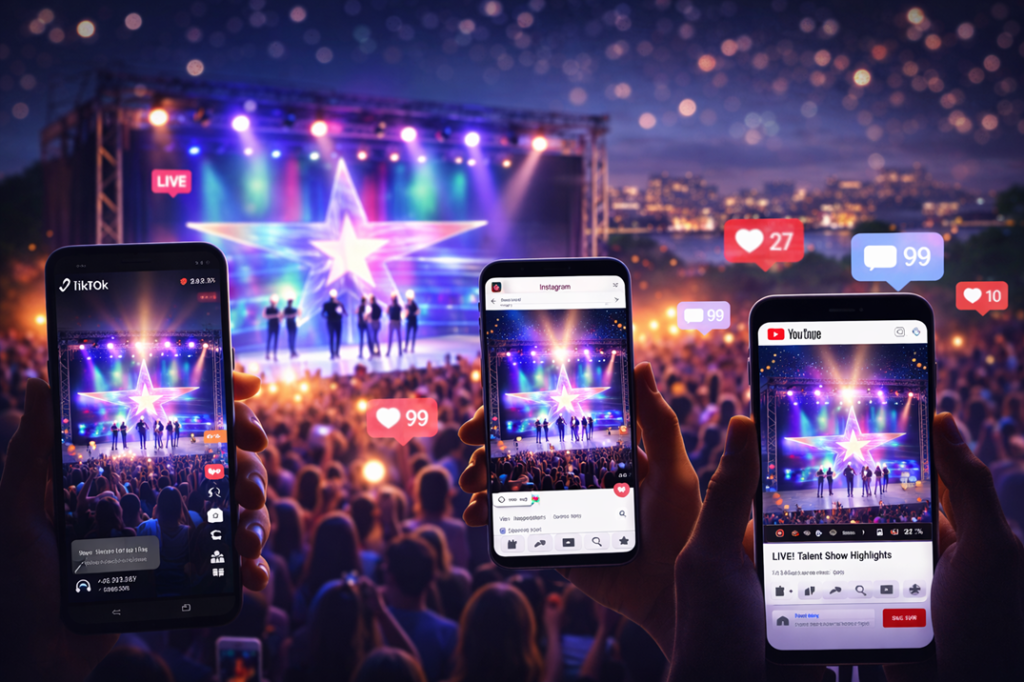
Every performance, backstage moment, and fan interaction becomes content that fuels:
- TikTok trends
- Instagram reels
- YouTube vlogs
This creates a feedback loop where the live experience generates digital buzz, which in turn drives more interest in both the show and future events.
In many ways, these experiences are built for the algorithm as much as the audience.
Challenges And Risks Of Expanding Beyond Television
While the upside is clear, the strategy isn’t without risk. Expanding into physical experiences introduces new layers of complexity that traditional TV production doesn’t face.
Key challenges include:
- High operational costs and logistics
- Maintaining production quality in non-studio environments
- Ensuring consistent brand identity across formats
- Managing fan expectations in premium experiences
There’s also the question of scalability. While a cruise-based format works for a global brand like AGT, smaller franchises may struggle to replicate this model without diluting their identity.
What This Means For The Future Of Reality TV
The expansion of America’s Got Talent into a live-at-sea experience represents more than a one-off experiment—it’s a glimpse into the future of unscripted entertainment.
Reality TV is no longer just about storytelling. It’s about building ecosystems where content, community, and commerce intersect.
In the coming years, we can expect:
- More hybrid formats combining live events and streaming
- Increased partnerships with travel, hospitality, and lifestyle brands
- Greater emphasis on fan participation and personalization
- Reality franchises evolving into full-scale entertainment brands
As the industry continues to adapt, one thing is clear: the most successful shows won’t just be the ones people watch—they’ll be the ones people can step inside.