
When Love on the Spectrum debuted in Australia in 2019 and later expanded globally through Netflix’s U.S. version in 2022, few predicted it would become one of the most culturally impactful reality formats of the decade. Yet by 2026, with Season 4 driving renewed attention and engagement, the show has solidified its place as a defining example of feel-good reality TV done right.
The series follows individuals on the autism spectrum navigating relationships, dating, and personal growth—without the artificial tension or manufactured conflict that defines much of the genre. Instead, it relies on authentic storytelling, emotional nuance, and respectful production choices.
That approach has proven not only critically successful but strategically valuable in a media landscape increasingly shaped by audience fatigue with traditional reality formats.
Why Season 4 Is Resonating Even More
Season 4’s momentum isn’t just about continuity—it reflects a deeper shift in viewer expectations. As audiences become more aware of editing manipulation and staged drama, they are gravitating toward content that feels genuine and emotionally grounded.

Recent episodes have continued to highlight returning participants like Abbey Romeo and David Isaacman, whose relationship has become a central emotional anchor for the series. Their ongoing journey resonates because it unfolds naturally, without forced twists or exaggerated conflict.
According to recent coverage from People’s report on Love on the Spectrum’s continued expansion, the show’s growing popularity has led to ongoing development discussions and increased investment in future seasons—further validating its long-term appeal.
This success demonstrates that audiences are not just accepting of slower, sincerity-driven storytelling—they are actively seeking it out.
How Feel-Good Reality TV Is Redefining Engagement
Traditionally, reality TV has relied on drama as its primary engagement tool. Conflict, competition, and controversy were considered essential for maintaining viewer interest. Love on the Spectrum challenges that assumption by proving that emotional authenticity can be just as compelling—if not more so.
The difference becomes clear when comparing traditional formats with authenticity-driven shows:
| Engagement Driver | Traditional Reality TV | Feel-Good Formats |
|---|---|---|
| Narrative focus | Conflict and elimination | Personal growth and connection |
| Editing style | Fast-paced, dramatic cuts | Observational and patient |
| Audience reaction | Shock and debate | Empathy and emotional investment |
| Longevity | Short-term buzz | Sustained engagement |
Rather than creating viral moments through controversy, Love on the Spectrum generates lasting emotional impact, which translates into repeat viewing and strong word-of-mouth growth.
Representation As A Core Strength
One of the most important elements behind the show’s success is its commitment to representation. By centering individuals on the autism spectrum, it expands the scope of reality TV beyond its usual casting norms.
But what sets the series apart is how that representation is handled. Participants are not framed as spectacles or defined solely by their diagnoses. Instead, they are portrayed as fully realized individuals with distinct personalities, goals, and emotional journeys.
This approach has helped shift broader conversations around inclusivity in entertainment, demonstrating that:
- Audiences are open to diverse storytelling perspectives
- Authentic representation can drive both engagement and critical acclaim
- Reality TV can function as a platform for understanding—not just entertainment
It’s a model that many producers are now studying closely as they rethink casting and storytelling strategies.
Netflix’s Strategic Pivot Toward Emotional Content
Netflix’s continued investment in Love on the Spectrum reflects a calculated shift in content strategy. While high-drama reality shows remain a key part of its lineup, the platform is increasingly balancing those with emotion-driven, low-conflict formats.

This diversification serves multiple purposes:
- It broadens audience demographics
- It strengthens brand perception as a platform for meaningful content
- It reduces reliance on controversy-driven engagement
- It creates programming that travels well across international markets
As explored in our analysis of reality TV crossovers reshaping streaming formats, platforms are no longer focused solely on volume—they are building ecosystems that include both high-energy entertainment and reflective storytelling.
Love on the Spectrum plays a key role in that balance.
The Production Approach That Makes It Work
A significant factor behind the show’s authenticity is its production philosophy. Unlike many reality programs, it avoids manipulation and instead prioritizes participant comfort and narrative integrity.
Key production elements include:
- Guided support from relationship coaches
- Minimal interference during interactions
- Respectful editing that avoids sensationalism
- A slower pacing that allows moments to breathe
This approach creates a viewing experience that feels closer to documentary storytelling than traditional reality TV, reinforcing the show’s credibility and emotional impact.
It also builds trust with both participants and audiences—something increasingly valuable in a genre often criticized for exploitation.
Social Media Without The Toxicity
Another distinguishing feature of Love on the Spectrum is how it performs on social media. While many reality shows generate buzz through controversy, this series thrives on positive amplification.
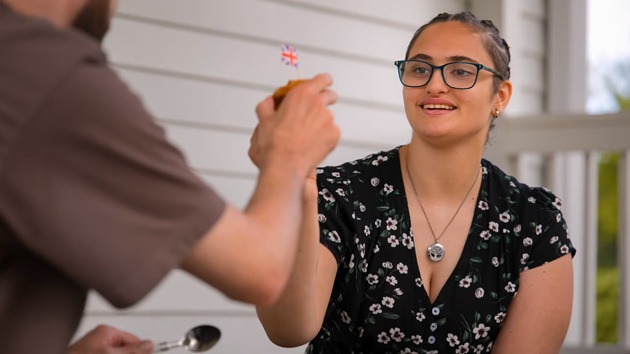
Clips frequently go viral for reasons that are fundamentally different:
- Genuine emotional breakthroughs
- Awkward but relatable interactions
- Moments of kindness and support
- Celebrations of personal milestones
This creates a feedback loop where social media reinforces the show’s tone rather than undermining it. In an environment where negativity often drives engagement, Love on the Spectrum proves that positivity can scale just as effectively.
What Season 4 Signals For The Future Of Reality TV
The continued success of Love on the Spectrum suggests that the genre is entering a new phase—one where emotional depth and authenticity are no longer niche qualities but core competitive advantages.
Looking ahead, several trends are likely to emerge:
- Increased investment in inclusive, representation-driven formats
- Greater emphasis on long-term storytelling over episodic drama
- Hybrid shows blending documentary and reality elements
- A shift toward content that fosters empathy rather than conflict
This doesn’t mean traditional reality TV will disappear. Instead, the genre is expanding, creating space for formats that prioritize connection over spectacle.
The Enduring Power Of Sincerity In A Saturated Market
In a streaming landscape defined by constant content releases and short attention spans, Love on the Spectrum stands out by doing less—not more. It resists the pressure to escalate drama and instead focuses on small, meaningful moments that resonate deeply.
That restraint is precisely what gives it power.
Season 4’s momentum confirms that audiences are not just willing to embrace feel-good reality TV—they are helping redefine its importance within the industry. What was once considered an alternative format is now emerging as a blueprint for sustainable, impactful storytelling.