Welcome to the world’s biggest unscripted drama—our actual lives. The numbers show we’ve become reality show addicts. Our viewing habits show interesting cultural differences.
APAC leads with 29% preference, just ahead of UCAN at 28%. But the real story is at the country level. South Africa tops with 51% viewership, making them possibly the most entertained or desperate nation.
The US plays a big role as both main consumer and creator of this content. Last year, American producers made 51% of global reality shows. The surge in production shows we’re not just watching—we’re building industries around drama.
What does this reveal about our collective psyche in 2024? The international TV scene mirrors our deepest curiosities and fears. It’s like the Truman Show on steroids.
Top Global Formats Exported/Adapted (Big Brother, Idol, etc.)
Reality TV is like a global map, with the US leading the way. UCAN platforms lead 80% of the top 20 reality TV platforms worldwide. American reality TV is like Starbucks – you see local twists but it’s always recognizable.
Last year, the US produced 74 titles, making up 51% of global output. The UK only produced 11%. This shows how American TV is a form of soft power diplomacy.
When global formats are adapted, they become more than just shows. Drag Race, for example, is a cultural ambassador, launching franchises in many countries. Each version keeps the core format but fits local tastes and talents.
FBOY Island is another example. It’s a show about sorting “nice guys” from players. It became a hit in the US, Mexico, and Australia, showing how a show can cross cultural lines.
LOL: Last One Laughing is a comedy reality show that works across continents. It shows that some humor is universal, bringing people together through laughter.
These shows are more than just entertainment. They’re cultural experiments, testing what works across borders. Their success shows the power of certain storylines and the need for local touches.
| Format | Original Country | Key Adapted Markets | Unique Local Elements |
|---|---|---|---|
| RuPaul’s Drag Race | United States | UK, Canada, Thailand, Philippines | Local drag traditions, judging styles |
| Big Brother | Netherlands | US, UK, Australia, Germany | Cultural tasks, voting systems |
| Idol/The Voice | UK/Netherlands | Over 150 countries worldwide | Music genres, judge personalities |
| LOL: Last One Laughing | Japan | Mexico, Australia, Germany | Local comedy styles, celebrity types |
| FBOY Island | United States | Mexico, Australia | Dating customs, social dynamics |
The table shows how global formats cross cultural lines. What makes a format global is its ability to adapt while staying true to itself.
This raises big questions about cultural exchange versus imperialism. Is it American dominance, or just the smart sharing of entertainment? The truth is likely a mix of both.
Trends in Localization and Cultural Tweaks
Reality TV is getting more global, but it also needs to be more local. This means shows are not just translated but completely reimagined for different places.
In Italy and France, 60% of the top shows are made locally. This shows how important it is to keep cultural traditions alive through TV.
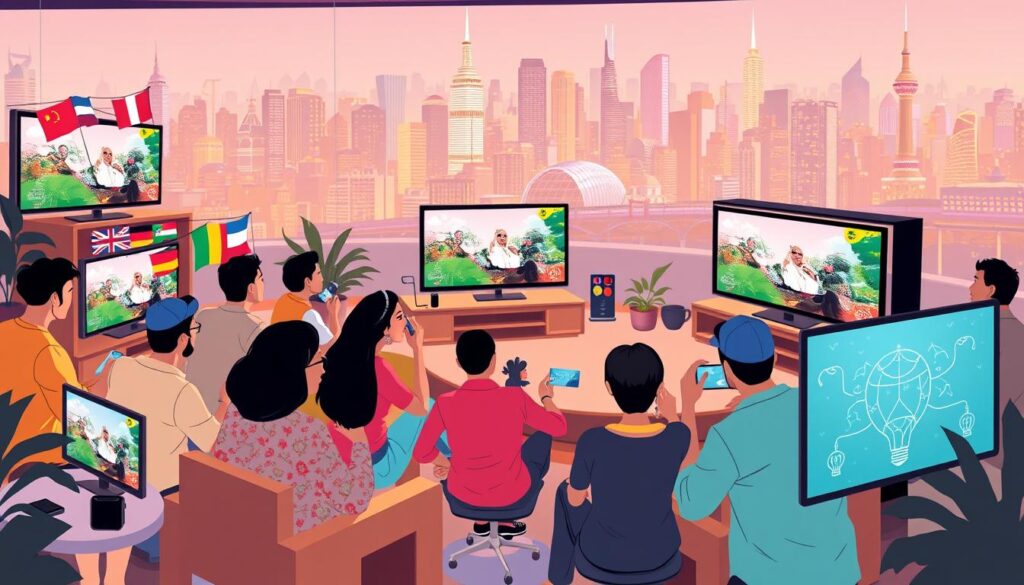
LOL: Last One Laughing is a great example. The show’s format stays the same, but the humor changes. German and South African versions show how different cultures can enjoy the same show in their own way.
Other countries like Germany, Spain, Poland, Mexico, and the U.S. also prefer local shows. Even though people watch global content, they connect more with stories from their own culture.
These trends are not just about translating shows. They’re about changing them to fit local tastes. Companies use local stars, humor, and cultural experts to make global shows feel like they belong.
| Country | Local Content in Top 5 | Notable Adapted Format | Cultural Specificity Level |
|---|---|---|---|
| Italy | 3/5 titles | LOL: Last One Laughing | High |
| France | 3/5 titles | Local cooking competitions | High |
| Germany | 2/5 titles | Adapted dating shows | Medium-High |
| United States | 4/5 titles | Local celebrity versions | Medium |
The entertainment world has learned that to succeed, shows must change. They need to adapt to fit different cultures. It’s not just about if a show will work, but how it will change.
This focus on local content is smart business. People want to see themselves on TV. The best shows are those that understand and celebrate local culture, making them loved worldwide.
Case Studies: Success and Flop Stories
Let’s examine reality TV hits and misses. This autopsy shows us more about culture than ratings ever could. Some shows fly high, while others hit a wall at customs.
Love is Blind shows us that love might be blind, but viewers aren’t. Its genius is in its simple idea: what if you took away physical attraction from dating? It turns out, the answer is “great TV” everywhere.
Physical: 100 proves that watching fit people struggle is universal. This South Korean show became a hit worldwide because pain is a language everyone understands. It’s the global language of schadenfreude.
LOL: Last One Laughing South Africa is a masterclass in adapting TV for different cultures. Unlike failed shows, it didn’t try to be universal. It found humor in local culture, making it a hit.
Now, let’s look at flops. Remember FGirl Island? Of course you don’t. It vanished quickly, showing that what works in one place might not in another.
Numbers show the importance of market strategy. The US leads in production, but Canada, Brazil, and the UK have their share. It’s about finding the right cultural fit, not dominating everywhere.
Every success and failure teaches the same lesson. International TV isn’t about finding universal truths. It’s about finding common vulnerabilities and presenting them in local ways. Shows that succeed understand that while we share emotions, we express them differently.
Want to see these trends in action? Check out this deep dive into reality TV’s global for more interesting stories.
The key to successful international TV? It’s not just about subtitles. It’s about cultural understanding, emotional connection, and the humility to see that what makes us laugh or cry is often very local.
Social Media as a Unifier
The real magic of modern reality TV isn’t just what we see on screen. It’s what happens in the digital spaces between episodes. Social media has become the key that makes global formats work across borders. It’s like the iOS to our reality addiction.
Los Angeles production teams now see Instagram, Twitter, and TikTok as essential tools. They’re building ecosystems where content lives between episodes and across oceans. The line between TV persona and real life has vanished, and audiences are fully invested.
Reality stars stay relevant through constant social media presence. They create the “24/7 narrative.” Their Instagram stories extend their TV storylines, making character development a 24/7 experience. This isn’t just secondary content—it’s primary storytelling where viewers become co-writers.
The interactive elements are fascinating. Live tweeting sessions turn passive viewers into active participants. Social media polls influence show directions, and hashtag campaigns create real-time engagement that spans continents. A Drag Race moment in Belgium can trend in Brazil before the credits roll.
What’s beautiful about this digital unification? Shows remain culturally specific in production, but their social media footprints are borderless. TikTok dances from Love Is Blind become international memes fast. The audience reaction in Milwaukee might mirror that in Melbourne within minutes of airing.
Social media hasn’t just connected global reality TV—it’s created a continuous, participatory cultural conversation. The hardware might differ across regions, but the operating system remains universally engaging. And honestly, isn’t that more interesting than whatever happens during commercial breaks?
The Next Big Thing?
What’s coming in our global reality TV world? Trends point to experiences so real, they might make Black Mirror seem tame. Los Angeles is leading the way, mixing VR and AR. Now, you can enter Love is Blind pods or face Physical: 100 challenges from home.
But it’s not just about the tech. Ethics are taking center stage. Shows now focus on personal growth, social justice, and making a difference. Gone are the days of just manufactured drama.
Diversity is changing how we cast shows. It’s not just about checking boxes; it’s about bringing in different views. This makes stories richer and more authentic.
In the end, the next big thing might be reality that feels truly real. The most compelling stories come from our complex world, not from being made up.