
Remember when channel surfing was simple? You’d pick between scripted shows and the evening news. Now, we face a world where reality and fiction mix in a way that’s both fascinating and addictive.
Reality TV has grown from a small niche to a huge hit. It’s cheap to make and gives us instant entertainment, but it makes us wonder about our choices. Shows like Survivor and The Bachelor turned regular folks into stars overnight.
This genre changed how we tell stories and turned our living rooms into places where we judge others. From The Real World to Housewives shows, it shows us our deepest desires to watch others’ lives. We’ll explore how this drama became our favorite guilty pleasure.
Reality TV vs Drama: Story Structure and Audience
Reality TV, once a break from scripted shows, has become as formulaic as dramas. The real humor lies in the “spontaneity” of reality TV, which is actually very planned.
The Bachelor uses romantic comedy tricks while seeming real. It follows a three-act story: meet-cutes, tension, and endings. Producers control the emotions with perfect timing.
Dramas build characters over time with writing and acting. Reality TV packs whole personalities into short episodes. People become heroes or villains quickly.
Editing in reality TV creates big emotional moments. Music and shots are chosen to make us feel something. It’s like magic, turning real moments into drama.
The predictability of reality TV is funny. We know when to expect tears and dramatic music. It’s more reliable than sitcom jokes.
| Aspect | Reality TV | Scripted Drama |
|---|---|---|
| Story Structure | Edited reality into narrative arcs | Pre-written scripts and plots |
| Character Development | Compressed into single episodes | Developed over multiple seasons |
| Emotional Impact | Created through editing and music | Crafted through writing and acting |
The biggest joke is how predictable reality TV is, yet it’s called “unscripted.” It’s like a magician showing all his tricks but saying it’s magic. We know it’s a joke, but we keep watching.
This mix of real and fake is comedy gold. We enjoy the show while knowing it’s staged. It’s TV’s longest-running joke, and we’re all in on it.
Game Shows vs Reality Competitions
Remember when TV competitions were just about answering trivia for small prizes? The Academy of Television Arts and Sciences makes a clear distinction between game shows and reality competitions. Game shows have set rules and clear rewards. Reality competitions, on the other hand, are complex and focus more on emotional stories than actual competition.
Shows like Survivor changed the game. They turned simple competitions into social experiments. Alliances form and break quickly, making tribal councils like modern-day dramas. These shows are docu-series about human behavior under pressure, showing us more about ourselves than any book could.
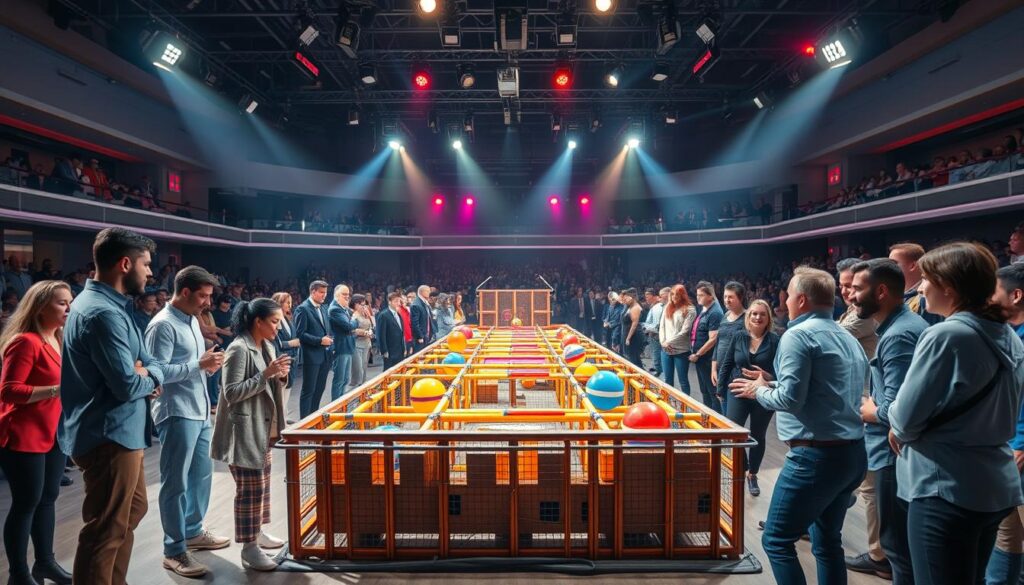
From Price is Right to The Voice, we’ve moved from valuing knowledge to emotional stories. Today, we want to know about contestants’ pasts and personal struggles. This makes talent shows feel like therapy sessions with better production.
This change makes us wonder what we really want to see. Do we watch for the competition or the drama? The answer is both, as these shows give us both entertainment and emotional connection. As industry discussions highlight, the lines have blurred beyond recognition.
Modern reality competitions are experts at making things seem real. Producers shape stories from hours of footage, creating compelling arcs. Contestants become characters, their true selves often edited for the show. This makes the docu-series feel real while being carefully made.
These shows dive deep into psychology, unlike their game show predecessors. We now see personal growth, moral struggles, and social games. It’s not just about winning, but how they win and what they sacrifice. This emotional depth keeps viewers hooked.
Reality competitions reflect our collective psyche. They show us how ordinary people react in extraordinary situations. While game shows entertained, reality competitions offer a deeper look into human nature.
Popularity & Ratings
Let’s talk numbers – the cold, hard reality of television ratings that separates hits from flops. In the brutal arena of prime-time television, reality shows dominate. They do this with the subtlety of a sledgehammer at a tea party.
Remember Joe Millionaire? Of course you do. That 2003 finale drew 40 million viewers. This is more than most scripted dramas get.
The show became a cultural phenomenon. It showed Americans love watching ordinary people in extraordinary situations.
Reality television is a perfect storm of high ratings and low production costs. While scripted dramas spend millions per episode, reality shows get similar numbers for less. It’s like buying generic cereal that tastes better than the name-brand stuff.
The post-9/11 surge in reality TV viewership shows something profound about our psyche. When the world feels chaotic, watching controlled chaos is comforting. Reality TV became America’s security blanket.
This ratings dominance creates a fascinating paradox. The shows critics love to hate are the ones audiences can’t stop watching. Reality TV generates more buzz than scripted series.
| Programming Type | Average Production Cost | Typical Viewer Numbers | Profit Margin |
|---|---|---|---|
| Reality Competition | $100,000-500,000/episode | 5-10 million viewers | 60-80% |
| Scripted Drama | $2-5 million/episode | 3-7 million viewers | 20-40% |
| Game Shows | $50,000-250,000/episode | 4-8 million viewers | 50-70% |
| Reality Docu-Series | $200,000-800,000/episode | 2-6 million viewers | 40-60% |
The numbers don’t lie – reality television’s competition format consistently delivers better returns. It’s not just cheap entertainment; it’s smart business. Viewers prefer real people over actors.
This ratings revolution changed everything. Scripted dramas now share the throne with reality shows. The competition element taps into something primal in viewers. We’re not just watching entertainment; we’re witnessing modern gladiatorial combat.
The enduring popularity of these formats proves one thing: in television, reality often outperforms art.
What Reality TV Has Borrowed from Others (and Vice Versa)
Reality TV and traditional shows have mixed in a weird way. It’s like a snake eating its own tail, but with ads and reunion shows. This mix-up has changed how we watch TV.
Reality TV took documentary tricks to seem real. The shaky cameras and confessional talks? Those are from real documentaries. But reality TV edited it all to fit their story.
Reality TV also took drama from soap operas. They used cliffhangers and love triangles, just like telenovelas. It’s like scripted stories but called “real life.”

Scripted TV has also learned from reality TV. Shows like The Office and Modern Family use documentary styles. Even big dramas use shaky cameras for a real feel.
This mix has created new TV types. Shows blend reality and storylines. We can’t always tell what’s real and what’s not.
Reality TV even used old morality plays. They turned sins into TV traits. Gluttony is now about food challenges, and greed is about schemes. It’s like old stories in new clothes.
This back-and-forth makes TV feel both new and old. It’s like we’re watching a TV version of processed food. It looks good but isn’t really natural.
Viewership Demographics
Ever wonder who watches reality TV? The answer might surprise you. Or maybe it won’t, because we all know someone binge-watching “Love Island” while pretending to read Proust.
Reality TV draws a diverse crowd. Young viewers love the shock and intensity it offers. They prefer real drama over scripted shows.
About 70% of viewers know the show is staged. Yet, we keep watching. It’s like knowing a magician’s tricks but being amazed by the show.
Different age groups watch reality TV for different reasons:
- Teenagers and young adults seek the adrenaline rush and social currency that comes with discussing the latest drama
- Educated professionals often engage in “hate-watching” – analyzing editing techniques while pretending to be above it all
- College students sometimes treat shows like instructional television for navigating real-world relationships
- Stay-at-home parents find comfort in knowing someone else’s life makes their chaos look manageable
The demographics show our guilty pleasures. That Ivy League graduate analyzing “The Bachelor” for psychological patterns? The sociology major writing papers about “Real World” as cultural anthropology? They’re all part of the reality TV ecosystem.
| Age Group | Primary Motivation | Viewing Pattern | Engagement Level |
|---|---|---|---|
| 18-24 | Social currency & shock value | Live viewing + social media | High emotional investment |
| 25-34 | Entertainment escape | Streaming + discussion groups | Analytical viewing |
| 35-44 | Relatability & distraction | Background viewing | Moderate engagement |
| 45+ | Cultural observation | Selective viewing | Critical consumption |
What does this say about our cultural moment? We’ve become sophisticated consumers of manufactured reality. We know the producers are manipulating scenes. Yet, we choose to participate in this collective suspension of disbelief.
The emotional engagement keeps us coming back. There’s something compelling about watching real people in exaggerated situations. It’s like gathering around the campfire for stories, but now it’s on a 65-inch OLED screen.
Reality TV viewership isn’t just about entertainment. It’s about connection, analysis, and sometimes, just the simple pleasure of knowing someone is having a worse day than you.
What the Future Holds
Reality TV isn’t going anywhere. Over 25 new reality shows hit screens in fall 2003. It’s as popular as ever, dominating TV like a Kardashian dominates headlines.
What’s next for reality TV? We’re seeing extreme formats, like Hunger Games meets home renovation. Emotional moments become key to getting screen time.
The big question is, what does reality TV do to our minds? Will we ever reach peak reality? Or will shows keep changing, making the ordinary seem dramatic?
Critics have mixed views. Some see it as a way to tell human stories. Others worry about its effects on values and self-esteem. But the cameras keep rolling, and people keep seeking fame.
The future of reality TV looks bright. As long as we watch, they’ll keep creating.