Let’s be honest—we’ve all fallen down that rabbit hole. You know the one. Binge-watching until 3 AM, questioning both your life choices and the authenticity of what you’re seeing.
As someone who recently traded scripted dramas for reality TV, I found the truth fascinating. It’s like Shakespeare meets Jerry Springer, but with better lighting and editing.
This deep dive explores the reality TV industry. It’s a mix of psychological experiment, cultural barometer, and entertainment. We’ll look at everything from the environments to the editing magic that makes the stories addictive.
Ready to have your perception of “reality” thoroughly deconstructed? Buckle up.
Pre-Production: Casting, Concept, Scripted vs. Unscripted
Ever wonder how reality TV producers make those chaotic moments we can’t look away from? It all starts before cameras roll, in a pre-production phase. Here, production secrets turn ordinary people into TV stars.
Casting isn’t about finding real people. It’s about picking the right ingredients for drama. Producers choose either famous faces or new talent to create the perfect mix.
The “unscripted” label is a bit misleading. It’s really about guided improvisation. Producers plan out scenarios and challenges in advance. They set up a stage for drama to unfold.
These environments are designed to push people to their limits. Every detail, from decor to location, is chosen to spark reactions. Think tropical villas or competitive kitchens.
Here’s how the magic happens:
- Concept Development: Producers figure out the emotional core of the show.
- Casting Alchemy: They mix personalities to create explosive combinations.
- Scenario Crafting: Challenges are designed to test people’s vulnerabilities.
- Environment Design: Sets influence behavior, adding to the drama.
Reality TV isn’t found – it’s made. The pre-production phase builds the foundation for all that follows. It shows that the most “real” moments often come from the most carefully planned situations.
Filming Techniques and Crew Roles
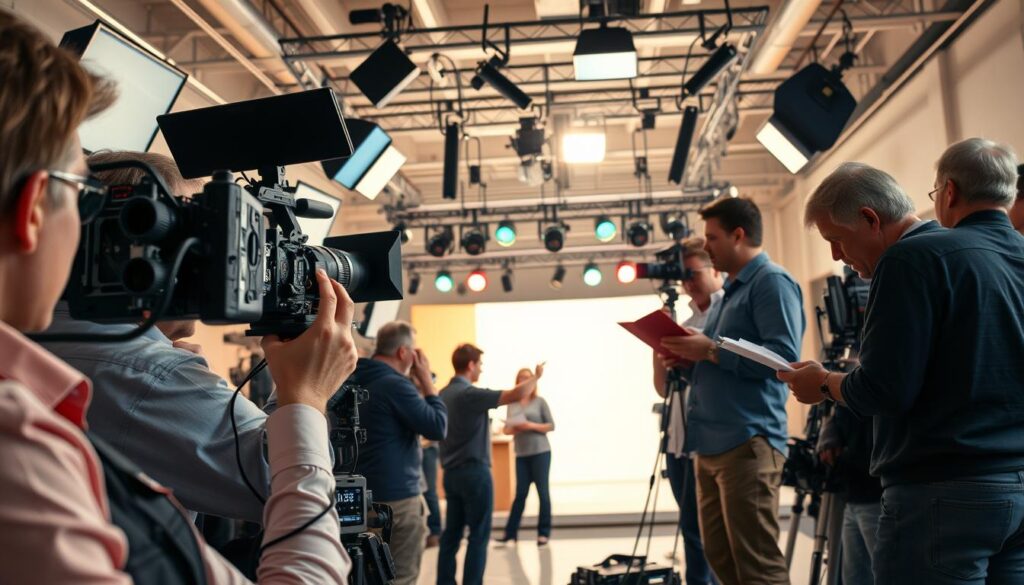
Reality TV isn’t just about pointing cameras at people. It’s a complex operation that rivals Big Brother’s surveillance. The filming process is a blend of technology and human observation.
Reality shows use camera arrays that NASA engineers would envy. They have many cameras to catch every angle of human interaction. The beauty shot camera makes contestants look their best or worst, depending on the show’s needs.
Close-ups are used to study contestants’ minds. Wide angles show the setting and social dynamics. POV shots make viewers feel like they’re part of the action. It’s not just documenting; it’s digging into emotions.
The crew works with military precision. Each member has a key role in this voyeuristic dance:
| Crew Role | Primary Function | Reality TV Specialization |
|---|---|---|
| Camera Operators | Frame and capture shots | Anticipating emotional moments before they happen |
| Sound Technicians | Capture audio clearly | Discreetly placing mics to catch whispered conversations |
| Shooting Director | Oversee camera coverage | Coordinating multiple angles for maximum drama extraction |
| Field Producers | Manage on-site production | Provoking reactions while maintaining “reality” illusion |
Reality TV filming captures real reactions in one take. This is why production teams are like small armies. They only get one chance to catch authentic moments.
The sound team is incredibly skilled. They can record a contestant’s nervous gulp from far away. Their equipment is top-notch, rivaling that of intelligence agencies.
What makes reality TV different from scripted shows? It doesn’t allow for second takes. Reality cameras must always be ready for human reactions. It’s more about predicting emotional outbursts than directing scenes.
This constant surveillance creates a unique atmosphere. Contestants may forget the cameras or even perform for them. The best reality TV captures both real moments and performances.
The technical skill behind reality TV filming is often overlooked. Those casual moments are captured by professionals working together. The result is entertainment that seems spontaneous but is carefully crafted.
Next time you watch reality TV, remember: it’s not life unfolding naturally. It’s the result of advanced filming techniques designed to extract human emotion for your enjoyment.
Editing and Story Crafting
If reality TV were a magic show, the editing suite would be where they hide all the mirrors and trap doors. This is where raw footage transforms into compelling television through what I like to call narrative alchemy. The real production secrets live in these dark rooms where editors work their psychological wizardry.
Imagine taking 500 hours of footage and creating a coherent 42-minute episode. Editors don’t just cut scenes – they perform emotional surgery. A casual comment becomes a villain’s manifesto. A random glance transforms into romantic tension. They’re building stories from human raw material.
Timeline manipulation is their superpower. Tuesday’s conversation can be edited to respond to Friday’s event. Music swells precisely when they want you to feel tension. Reaction shots from completely different moments suggest connections that never existed.
The editing process follows a precise psychological architecture:
| Editing Technique | Psychological Effect | Reality Distortion Level |
|---|---|---|
| Timeline Rearrangement | Creates false causality | High |
| Selective Music Scoring | Manipulates emotional response | Medium-High |
| Reaction Shot Placement | Suggests non-existent relationships | Medium |
| Conversation Franken-biting | Creates new dialogue from fragments | Very High |
Sound design plays a key role in these production secrets. The subtle addition of crowd murmurs, exaggerated door slams, or tense musical cues can transform mundane moments into high drama. It’s emotional manipulation through audio architecture.
Editors work closely with story producers to identify narrative threads. They look for:
- Potential conflicts that can be enhanced
- Romantic tensions that can be exaggerated
- Character arcs that can be manufactured
- Moments that can be repurposed for different contexts
The magic happens in the juxtaposition. Place two unrelated scenes back-to-back, and suddenly you have cause and effect. Add the right music, and you’ve created emotional resonance from thin air. These production secrets turn random human behavior into crafted storytelling.
Next time you watch reality TV, listen for the audio cues. Watch for reaction shots that don’t quite match the dialogue. You’re not seeing reality – you’re seeing reality carefully sculpted by masters of psychological narrative.
Budgets, Sponsorships, and Locations
Ever wonder why reality TV stars suddenly love mid-range sedans and energy drinks? It’s all about the money. Producers balance budgets while viewers watch drama.
Choosing locations is often about saving money, not beauty. Wisconsin paid $1.3 million to host Top Chef. It’s a lesson in how to spend tourism dollars.

Sponsorships are hidden in these shows. The drinks contestants drink? Paid ads. The cars they get? Deals with brands. It’s all about selling stuff.
Reality TV uses smart budgeting. They film in towns that pay them. They use local tourism to save on sets and scripts. The real story is in the money.
Here’s how your favorite shows are made:
| Budget Category | Traditional TV Production | Reality TV Filming | Cost Savings Strategy |
|---|---|---|---|
| Location Fees | $500,000+ | $0 (Often paid) | Tourism board incentives |
| Set Construction | $1M+ | $200,000 | Existing locations |
| Product Placement | Limited | 30% of budget | Integrated sponsorships |
| Crew Size | 100+ people | 40-60 people | Multi-role assignments |
| Post-Production | 6 months | 3 months | Template editing |
Off-camera, cities fight to host shows. They offer tax breaks and cash. Brands pay for product placement. It’s all about drama and saving money.
Learning about reality TV costs shows why money matters more than creativity. That fancy trip? Sponsored. The surprise prize? Planned. The local experience? Paid for by tourism.
Next time you see a reality TV star get a new car, think about the accountant who planned it. Reality TV is all about the money.
Real Producers Tell-All
Reality TV’s puppet masters are a mix of Freud, Barnum & Bailey, and mad scientists. They walk a tightrope between real and fake. Their secrets show how they balance these two.
One Traitors executive said their biggest worry isn’t contestants turning on each other. It’s host Alan Cumming spilling secrets after too many martinis. The show’s psychological games are for everyone, not just contestants.
Survivor producers create challenges to break contestants’ minds. They test how long dignity lasts under extreme pressure. One showrunner called it “ethically questionable social experimentation with better food.”
The Challenge producers handle veteran cast dynamics like experts. They know which personalities clash and plan confrontations. It’s more about mixing personalities than showing real TV.
These production secrets tell us three key things:
- Casting is 90% of the battle – producers look for specific types who perform well under pressure
- Every “spontaneous” moment is planned like a military operation
- The fourth wall isn’t just broken – it never existed in the first place
One producer said, “We’re not documenting reality. We’re making it with real people.” The biggest surprise? They know they’re faking it but keep up the act.
Their honest stories show reality TV’s big secret: the most “real” moments are made. It’s not lying – it’s clever storytelling hidden as chaos.
How Shows Differ by Genre
Reality TV is like a big, messy family gathering. Shows like Survivor and The Bachelor mix in different ways. Each type has its own way of making TV, giving us unique shows all under the “reality” label.
Competition shows are super organized. American Ninja Warrior’s courses are designed with safety in mind. The filming is precise, capturing every detail.
Shows like Life Below Zero are different. They use real-life footage but also guide the story. This mix makes the show feel real but also planned.
Cooking shows have their own special rules. Shows like Guy Fieri’s mix cooking skills with drama. It’s a mix of talent and made-up tension.
Shows like The Traitors are all about drama. They cast people to clash, making for exciting TV. It’s more about creating drama than showing real life.
Every type of show has its own take on being real. Survival shows focus on challenges, while dating shows highlight emotions. But all use special filming and editing to shape what we see.
Knowing how different shows are made changes how we watch TV. Even though cameras are rolling, what we see is always edited.
Takeaways
So, what’s the truth about reality TV? It’s a lesson in how to create chaos on purpose. These shows aren’t fake; they’re just experts at making it seem real.
The secret to their success is setting up situations where drama seems like it must happen. It’s like a documentary with a twist. Real feelings meet planned scenes, making it hard to look away.
When you watch “The Bachelor” or “Survivor,” remember it’s not real life. It’s carefully planned. And that’s why we enjoy it. The magic is in how they arrange things.