
An Emmy-winning producer now delivers your Uber Eats. It’s not a Black Mirror scene—it’s today’s reality TV world. Creators face bloodsport economics, where budgets for shows like Shark Week are cut quickly.
Streaming changes everything. Netflix’s Squid Game shows even survival shows can be altered. Warner Bros. Discovery has cut a lot of content, leaving many shows in the dark. Yet, unscripted content makes up 42% of streaming libraries. Why? It’s because shows like “will they eat the bug?” keep viewers hooked at low costs.
This isn’t just Real Housewives drama—it’s high-stakes chess. Producers deal with platforms that change strategies quickly. Ad-supported tiers are booming, while linear ratings are falling, making it a fight for viewers.
So, what’s next for our favorite shows? From Shark Tank valuations to Below Deck disputes, we’re exploring the guilty pleasure industrial complex. Are you ready to see how it all works?
Evolution of Reality TV: A Brief History
Reality TV started with a divorced mom doing dishes in 1973. PBS’s An American Family accidentally created the genre. It showed the Louds’ marriage falling apart, proving people would watch anything called “authentic human drama.”
The 2000s were the Golden Age of Schadenfreude. Survivor contestants ate bugs, and American Idol humiliated bad singers. The Simple Life made Paris Hilton seem relatable. Now, Love Island contestants repeat what Paradise Hotel did in 2003. The only changes are better spray tans and worse contracts.
Why do today’s dating shows feel like we’ve seen it all before? It’s because of market trends masquerading as new ideas. Streaming platforms focus on “snackable” content for TikTok and Instagram. A 25-year-old casting director said, “We’re not filming stories anymore—we’re manufacturing meme templates.”
Cameras got smaller, and our attention spans got shorter. MTV’s The Real World had 22 minutes of real talk between hot tub fights. Now, Reality TV trends 2025 need 7-second conflicts for vertical screens. It’s less about who will be voted off and more about if a clip will go viral before the episode airs.
Today, shows get canceled for feeling “stale” while new ones with slightly younger casts get greenlit. The market trends show we’ve come full circle. From PBS documentaries to TikTok-fueled chaos, it’s all about our love for others’ bad choices.
The 2025 Landscape: Who Dominates the Market?
Reality TV in 2025 is like a dream created by streaming algorithms. Imagine Squid Game meets Keeping Up With the Kardashians, but with Mormon influencers holding flamethrowers. Platforms are fighting for viewers, with some going for absurdist spectacle and others sticking to old formulas. Let’s look at who’s making it and who’s not.
Upcoming Reality TV Shows 2025
Peacock is spending $20 million per episode on “Murder Mansion: Influencer Edition”, a mix of Clue and TikTok. Netflix is also in the game with “Extreme ASMR Bake-Off” (yes, whispering chefs). Here are some shows you might actually want to watch:
- BBC’s The Traitors: Arctic Edition (renewed through 2027)
- HBO Max’s Shark Week: Cage-Free (production cut 40% after PETA backlash)
- Netflix’s Polygamist Pitch Meetings – Mormon moms looking for venture capital
Reality TV Show Cancellations
ABC canceled three Bachelor spinoffs quickly. This shows that people want structured chaos more than romance. Here are some shows that didn’t make it:
| Platform | Canceled Show | Reason |
|---|---|---|
| ABC | Bachelor: Senior Swingers | Zero proposals, lots of heartburn med ads |
| Paramount+ | Love Island: North Dakota | Only 12 viewers (all contestants’ moms) |
| Discovery | Shark Week: Golf Edition | Great whites don’t like putters |
Bravo is quietly rebooting Real Housewives of Atlantis. It’s about mermaids throwing champagne flutes. The takeaway? In 2025, go big or go home… preferably in a gold lamé wetsuit.
The Business Model: How Reality TV Makes Money
Forget about product placement. We’re in a new era where reality TV shows are the ads. Instead of 30-second spots, shows are built around products like Sephora palettes or Home Depot toolkits. Let’s explore how this turns drama into profit.
Producers are no longer just making shows. They’re creating content ecosystems. Take that $1M/episode budget breakdown:
| Expense Category | Cost Per Episode | Revenue Stream |
|---|---|---|
| Production Crew | $250k | Brand Sponsorships |
| Talent Fees | $180k | Streaming Licensing |
| Brand Integrations | $300k | Social Media Monetization |
| Post-Production | $120k | International Distribution |
Look at the irony. The cost for brand integrations often exceeds production costs. Networks now want “360-degree partner activation.” This means they’ll put logos everywhere, from credits to the host’s water bottle.
Globalization’s Dirty Secret
Ever wondered why every country has its own Love Island clone? International co-productions split costs and multiply revenue. A dating show in Bali gets:
- 50% funding from a German streamer
- 30% from Australian advertisers
- 20% from U.S. product placement deals
This results in risk-free shows that profit from cultural differences. Marx would’ve loved Below Deck, where crew tips fund production while viewers debate tip percentages.
Welcome to late-stage reality capitalism. The fourth wall isn’t just broken; it’s been replaced by a billboard.
Advertising, Sponsorship, and Brand Deals
Forget Nielsen ratings – today’s advertisers look at TikTok stitches and Instagram meltdowns. When a Real Housewives star’s skincare line fails fast, brands are watching closely. They’re thinking about the return on investment from these human dramas.

Discovery cut its ad budget by 15% recently. This shows that old-school product placements are fading. Why pay for a cooking show when MrBeast’s YouTube burger empire gets 100 million Gen Z viewers? One big reality tv gossip moment can beat out six months of TV ads.
| Platform | Engagement Style | Risk Factor | ROI Timeline |
|---|---|---|---|
| Traditional TV Ads | Passive viewing | High (ratings drop = wasted $) | 6-12 months |
| Influencer Integrations | TikTok challenges | Medium (scandal risk) | 48 hours |
| Branded Reality Spin-offs | Luxury villa product drops | Nuclear (like Fyre Fest 2.0) | Immediate backlash |
Smart brands now see cast members as investments. They spread their bets across platforms and watch for meltdowns. When Pepsi moved from singing competitions to YouTube pranksters, they aimed to avoid big scandals.
The new reality tv advertising strategy?
1. Target cast members’ followers
2. Include social media clauses in contracts
3. Have crisis PR teams ready for leaks
As one network exec said: “We don’t sell ads anymore. We monetize chaos.” With unscripted content leading streaming, your next car ad might feature a TikTok star. Get ready.
Impact of Ratings Wars: Winners & Losers
Reality TV’s cast changes are as common as a Survivor immunity challenge. When ratings fall, producers don’t just tweak things. They replace cast members like defective puzzle pieces. This creates a world where Bravo’s 87% share of unscripted TV depends on quick cast changes.
Reality TV Cast Changes: The Algorithm Behind the Chaos
Why did your favorite villain leave mid-season? It’s not “family emergencies” or “creative differences.” Networks use real-time ratings data to justify cast changes. This has led to a freelancer crisis worse than Hollywood’s 2023 strikes. Here are some survival tips:
- The Scapegoat Swap: Swap one controversial cast member every 3 episodes to create drama
- Contractual Combustion: Make two meltdowns per season or face being replaced
- Demographic Jenga: Change cast ages/ethnicities based on quarterly audience data
Bravo’s Real Housewives franchise is a master of this strategy. Their 2025 plan includes three forced showmances and one “mystery illness” exit per city. It’s not about storytelling; it’s content algebra to boost Nielsen metrics and social media.
The result? Cast members now audition for their own jobs between seasons. As one axed Bachelor contestant shared: “They don’t fire you – they just stop calling your agent… right after your Instagram engagement drops 2%.”
The Economics of Streaming vs. Networks
Streaming platforms and broadcast networks are in a fierce battle. It’s like a Survivor showdown, where the winner is the one who spends the most money. Netflix and CBS are taking different approaches. Netflix is all about spending big, while CBS is reusing old shows.
When NatGeo cut 35% of its staff, it was a big move. It was like cutting off limbs to fit into skinny jeans. Peacock’s The Traitors is doing well, showing that you don’t need a huge budget to win.
Here’s how the platforms compare:
| Strategy | Streaming (Netflix/Peacock) | Networks (CBS/NatGeo) |
|---|---|---|
| Content Budget | $17M/episode for Selling Sunset spinoffs | Recycling 90 Day Fiancé for 14 seasons |
| Ad Model | Premium subscriptions + product placements | 30-second spots during NCIS marathons |
| Audience Reach | Global binge-watchers under 40 | Linear viewers who own DVD players |
Cable’s 90 Day Fiancé is a big hit, with many spinoffs. Streaming services spend a lot on shows, but cable keeps going strong. It’s like cable is a cockroach that can’t be killed.
In the end, producers are the real winners. They turn simple moments into big hits. It’s like they’re making money from drunken hot tub scenes. That’s a business model even Shark Tank can’t beat.
Global Trends: What Works Internationally?
Reality TV isn’t just a cultural export. It’s a global game of telephone where formats change fast. The Dutch gave us The Traitors, a game that shows Americans are drama novices compared to Europe. South Korea’s Physical: 100 turned survival shows into deep talks on survival and strength.
Three key trends in international reality TV:
- Social stratification as sport: Britain’s Gogglebox and Queer Eye UK explore class better than Dickens
- Psychological warfare: Japan’s Terrace House shows that silence can be more powerful than shouting
- Dating show escalation: Any US version needs more hot tubs and less eye contact
Fremantle’s study shows 43% of reality TV revenue comes from overseas. But success abroad isn’t just about translating shows. Norway’s Love Island has sauna talks instead of poolside drinks. Germany’s Bachelor contestants discuss Merkel’s policies during rose ceremonies.
Reality TV premiere dates show a pattern: what fails at home succeeds abroad. Australia’s Married at First Sight explores immigration. France’s Drag Race debates laïcité through runway walks. America keeps rebooting The Simple Life for Paris Hilton’s goat-milking.
The key takeaway? Raw authenticity travels better than polished predictability. Streaming platforms are looking worldwide for hits. The next big thing might come from São Paulo’s favelas. Just remember, add more hot tubs.
Interview: Industry Experts Weigh In
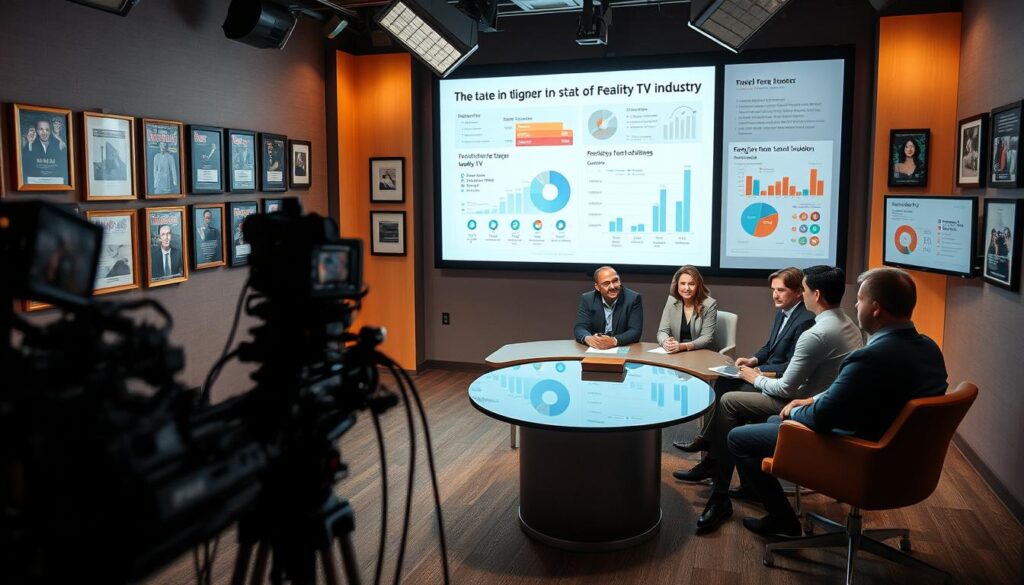
Reality TV’s behind-the-scenes drama is as intense as any show on Bravo. To understand reality tv trends 2025, we talked to insiders who’ve seen it all. An Emmy-winning producer, now driving Uber, said: “We’re not making TV anymore. We’re making people agree with late capitalism’s mess.”
Mara Tekach, a former Bravo executive, shared the harsh reality: “Cast members earn 37% less now than in 2015, but work three times as long. But people want to see more real emotions, like on 90 Day Fiancé.” She also revealed the truth about confessionals: “Those emotional monologues? We call them ‘trauma tax.’”
| Expert | Role | Key Insight | 2025 Prediction |
|---|---|---|---|
| James Roh (Wheelhouse) | CEO | “Streamers want Kardashian-caliber drama at TikTok prices” | AI-generated cast members tested by Q3 |
| Lina Patel | Showrunner | “Networks now demand 22% more interpersonal conflict per episode” | Union strikes over emotional labor clauses |
| Carlos Mendez | Reality Casting Director | “We algorithmically match personalities for maximum friction” | Biometric audience reaction tracking |
What’s even more shocking? Producers don’t like the shows they make. A Bachelor producer, who wants to stay anonymous, said: “I’ve caused 83 fights this year. My therapist says I’m emotionally numb.”
As platforms fight for the top spot in reality TV, a big question remains: Are we part of the problem? When even the creators call their work “emotional strip mining,” maybe we should be warned. So, grab some popcorn.
Viewership Demographics & Audience Shifts
If you think reality TV is just for bored retirees and drama-starved teens, think again. The latest data shows a demographic civil war. Gen Z is mixing TikTok duets with Love Island confessionals. Boomers are binge-watching 90 Day Fiancé like it’s news. And millennials? They’re lying about their viewing habits at brunch.
The 18-49 demo is key for networks. But only 37% of this group watches reality premieres live now. That’s down from 62% in 2020. Yet, 55% stream full episodes within 72 hours after seeing clips online. The new goal? Get your reality tv premiere dates trending on memes.
Let’s look at how different generations watch reality TV:
| Age Group | Preferred Platform | Top Engagement | Secret Shame |
|---|---|---|---|
| 18-24 | TikTok/YouTube Shorts | Mashup edits | Watching full episodes “for research” |
| 35-49 | Streaming services | Reddit conspiracy theories | Knowing every Real Housewives timeline |
| 50+ | Traditional cable | Live-tweeting scandals | Owning Drag Race merch (12% and rising) |
The biggest surprise? 22% overlap between RuPaul’s Drag Race fans and C-SPAN watchers. When did these two groups start to overlap? Networks are trying to figure out this Schrödinger’s audience – viewers who want both high camp and policy debates.
Now, reality tv updates spread fast on TikTok duets. These duets get 2.1M daily interactions. Shows are casting influencers during filming seasons to tap into their fanbases. It’s not just “Will they survive the island?” anymore. It’s “Can their TikTok followers carry the ratings?”
Next time someone says they only watch prestige dramas, check their YouTube history. The line between “guilty pleasure” and cultural currency is now blurred. And it’s very profitable.
Reality TV’s Influence on Pop Culture
Reality TV didn’t just reflect our culture; it changed it. Think about it: when a Real Housewives catchphrase becomes political shorthand (“Who gon’ check me, boo?”) or a Kardashian skincare launch triggers Wall Street analyst reports, we’ve crossed into uncharted territory. This genre’s fingerprints are everywhere, from TikTok trends to Ivy League syllabi.
Bravo’s programming alone could fuel a sociology thesis. Their “reunion special” format now dictates how we process scandals—whether discussing celebrity feuds or workplace drama. Reality tv cast changes drive gossip cycles harder than congressional elections. Remember how Vanderpump Rules’ “Scandoval” dominated headlines longer than most Supreme Court cases?
Social media turned this symbiosis nuclear. Failed stars rebrand as influencers overnight, peddling CBD gummies and trauma-bonding with followers. But here’s the twist: platforms like Instagram now cast reality shows based on follower counts. Your aunt’s viral baking video? That’s just unpaid audition tape for Great American Recipe.
Even academia’s not immune. Yale offers a course dissecting Real Housewives conflict resolution, while marketing textbooks analyze reality tv gossip as modern folklore. Politicians hire producers to craft “authentic” campaign confessionals—because nothing says “trustworthy leader” like a well-timed fourth-wall break.
This cultural takeover raises questions: Are we the audience, or the cast? When did “plotting strategy” start sounding suspiciously like a Survivor alliance flowchart? Love it or hate it, reality TV’s become our shared language—a messy, glittery dialect where Teresa Giudice’s table flip holds equal weight to Shakespearean soliloquies.
What the Future Holds
Reality TV in 2025 will be like a Black Mirror episode. Imagine AI making Real Housewives fights and dating shows with hologram swipes. Three big things will happen:
1. The Rise of Franken-Editing
AI can now make “narrative diamonds” from 8,000 hours of footage. Netflix is working on AI Housewives with deepfake tech. But can AI really capture Teresa Giudice’s drama? Test audiences say it feels like ChatGPT having a crisis.
2. Metaverse Mayhem (With Glitches)
VR dating shows are coming to streaming platforms. But, tech issues mean awkward virtual dates. A Beta tester said it’s hard to feel real chemistry with pixel blobs.
| Trend | Streaming Play | Network Countermove | Survival Odds |
|---|---|---|---|
| AI-Generated Drama | Netflix’s “Synthetic Housewives” (2025) | ABC’s human-only “Authenticity Clause” | ⭐️⭐️⭐️⭐️ |
| VR Dating Shows | Peacock’s “Love in the Metaverse” | CBS sticks to beachside rose ceremonies | ⭐️⭐️ |
| Interactive Voting | Prime Video’s choose-your-edit episodes | NBC’s live text polls during broadcasts | ⭐️⭐️⭐️⭐️⭐️ |
Why Networks Will Struggle:
Traditional channels can’t compete with streaming’s AI/VR budgets. But they’re focusing on “analog authenticity” like fishing shows and Survivor: No WiFi Edition. Will people watch? Ratings say yes, if they can find it.
Copyright lawsuits over AI-generated catchphrases are a big risk. We’ve already seen “Whoop-It-Gate 2024” over AI NeNe Leakes’ laugh. Reality TV’s future will be messy, meta, and full of legal issues. And we love it.
Conclusion: Which Trends Will Shape the Next Era?
The reality TV world is tough, where only the smartest survive. Think of Vanderpump Rules and Wall Street mixed together. Alliances form quickly, and old shows get cut like Survivor contestants.
Market trends show streaming services like Netflix and Peacock are betting big on cheap, exciting shows. But now, they’re focusing on shows made with international partners. Bravo’s “Scandoval” is just the beginning.
Globalization is already here, not just coming. Shows like The Traitors show people love mixing cultures. Streamers are looking for hits that work worldwide. Traditional networks must innovate or risk being left behind.
But the numbers are clear. Unscripted shows make up 42% of what’s available on streaming, according to Nielsen. Reality TV can change to fit what viewers want, from TikTok-style shows to old favorites. It’s all about keeping things exciting.
So, get ready for the next big thing in reality TV. It will be all about what makes money and what people want to watch. Will your favorite show make it? Look at the ratings and profits.